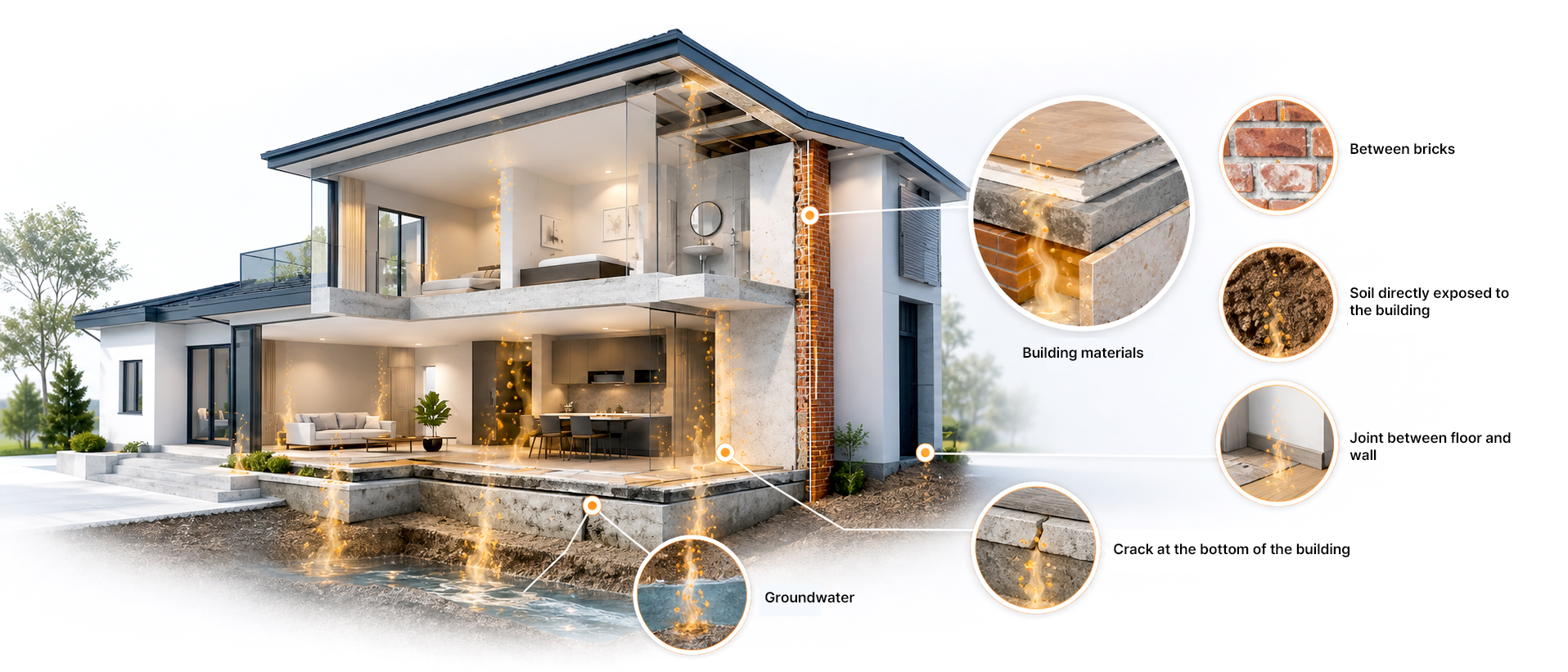
ENTRY PATHWAYS
Radon is invisible, yet it is one of the major harmful substances that may affect
indoor air quality and human health.
Radon Is Not Only a Lower-Floor Issue
Indoor radon usually enters buildings when radon generated from soil or rock penetrates through cracks in the lower parts of a building, gaps between bricks, or other structural openings. For this reason, radon levels are often measured higher on lower floors.
However, when building materials with high radon content — such as marble, gypsum board, or concrete — are used, elevated radon levels may also be detected on higher floors.